%2Ffit-in%2F250x250%2Fguide_websites%2F3047%2Fimages%2F1753381719109stevelogo.jpg&w=1920&q=100)
Spotted Weakfish Fishing Guide for South Padre Island
Spotted Weakfish Fishing in South Padre Island
%2F%2Fusers%2F3e750e46-d58e-456c-9169-d46dfdead4c0%2Fimages%2Fspotted-weakfish-south-padre-deep-10111.png&w=1920&q=75)
The Cynoscion Nebulosus belongs to the order Perciformes and family Sciaenidae. It typically measures between 12 and 39 inches in length, with a weight range from 3 to 17 lbs. Habitat: onshore, nearshore, coastal river. - Popular gamefish in Gulf of Mexico waters. - Found from Maryland to Florida along the coast. - Excellent table fare with mild, flaky white meat.
Guided Fishing Trip by Captain Steven Hillary in August

Meet your Captain Steven Hillary
- Specializing in Family & Children Fishing Trips


Summary
Captain Steven Hillary of Today We Fish Charter and Adventures on Saturday July delivered an outstanding 5-hour morning bay fishing charter that showcased South Padre Island's diverse fishing opportunities. Our crew experienced the perfect combination of surf fishing, pier fishing, and deep sea action, landing a beautiful 15-inch Spotted Weakfish along with several other catches. The partly cloudy July conditions provided ideal comfort while we worked the inshore waters, nearshore structure, and deeper offshore zones. South Padre Island's year-round fishing season peaks during summer months, offering anglers excellent chances at multiple species using varied techniques from surf casting to deep sea jigging. This guided fishing trip demonstrates why local knowledge and equipment-included charters make the difference between a good day and an unforgettable fishing experience on the Texas coast.
Guided Fishing Trip with Captain Steven Hillary – Rates & Booking
Captain Steven Hillary of Today We Fish Charter and Adventures on Saturday July offers comprehensive 5-hour morning bay fishing trips that cover South Padre Island's most productive waters. Our licensed guide provides all necessary gear, tackle, and local expertise for surf fishing, pier fishing, and deep sea adventures. Trip rates include rod and reel setups, bait, tackle, and safety equipment with flexible booking options available online. Contact us directly for current availability, group rates, and weather-dependent scheduling to ensure your best fishing experience on the Texas Gulf Coast.
Highlights of Bay Fishing Charter
This morning charter showcased the incredible diversity of South Padre Island fishing with successful catches using multiple techniques. Our crew landed a respectable 15-inch Spotted Weakfish along with several other species while experiencing surf fishing from the beach, structure fishing from local piers, and deep sea action in offshore waters. The partly cloudy July conditions provided perfect comfort levels while maintaining excellent fish activity throughout the morning hours.
Captain Steven's local knowledge proved invaluable as we moved between different fishing zones, adapting our approach based on tide, weather, and fish behavior. The combination of inshore bay waters, nearshore structure, and deeper offshore zones gives anglers the best chance at multiple species during a single trip.
Local Species Insights: Spotted Weakfish
Spotted Weakfish thrive in South Padre Island's diverse coastal environment, moving between bay waters, nearshore reefs, and deeper offshore structure depending on season and feeding patterns. These members of the drum family respond well to both live bait and artificial lures, making them excellent targets for anglers using varied techniques. July conditions bring active feeding as these fish take advantage of abundant baitfish populations around piers, jetties, and natural structure. The 15-inch specimen we landed demonstrates the quality fishing available when local knowledge meets proper technique and timing.
Plan Your Guided Fishing Trip Day
Our 5-hour morning charters begin at first light to maximize fishing opportunities during peak feeding times. All rod and reel combinations, tackle, bait, and safety equipment are provided, allowing guests to focus on fishing rather than gear preparation. The trip accommodates various skill levels from beginners to experienced anglers, with Captain Steven providing instruction and guidance throughout the day. We recommend bringing sun protection, snacks, and drinks while we handle all fishing logistics for your South Padre Island adventure.
Fishing in Texas: Spotted Weakfish and Southern Kingcroaker
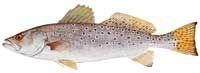
The Spotted Weakfish (Cynoscion nebulosus), also known as spotted seatrout, is a highly prized gamefish belonging to the Perciformes order and Sciaenidae family. This popular species features distinctive dark spots scattered across its silver sides and back, making it easily recognizable to anglers. In South Padre Island waters this July, these fish are particularly active around structure and grass beds.
Spotted Weakfish Overview
Spotted Weakfish are among the most sought-after inshore gamefish along the Texas Gulf Coast, valued for their fighting ability and excellent table fare. These fish inhabit a wide range of coastal environments from shallow grass flats to deeper nearshore waters, making them accessible to various fishing techniques and skill levels.
Spotted Weakfish Habitat and Distribution
These adaptable fish thrive in onshore, nearshore, and coastal river environments throughout the Gulf of Mexico. Around South Padre Island, they frequent grass beds, oyster reefs, drop-offs, and structure where they ambush prey. They move between shallow and deeper waters based on tides, temperature, and feeding opportunities.
Spotted Weakfish Size and Weight
Adult specimens typically range from 12 to 39 inches in length, with weights between 3 and 17 pounds. The 15-inch fish caught on our charter represents a solid keeper-sized specimen, while trophy fish over 25 inches provide exceptional sport and excellent eating.
Spotted Weakfish Diet and Behavior
These predatory fish feed primarily on shrimp, small crabs, and various baitfish including mullet, anchovies, and menhaden. They are most active during dawn and dusk periods, though they can be caught throughout the day when conditions are favorable. Their feeding behavior makes them responsive to both live and artificial baits.
Spotted Weakfish Spawning Season
Spawning occurs in nearshore waters during warmer months, with peak activity from April through September. During this period, fish concentrate in specific areas, making them more predictable for anglers who understand their seasonal movements and preferred water temperatures.
Spotted Weakfish Fishing Techniques
Effective methods include live bait fishing with shrimp or small baitfish, artificial lures such as soft plastics and topwater plugs, and drift fishing over grass beds. In July, anglers around South Padre Island find success using popping corks with live shrimp over shallow grass flats and around pier pilings during moving tides.
Spotted Weakfish Is It Good to Eat?
These fish offer excellent table fare with mild, flaky white meat that's low in fat and high in protein. The flesh cooks well using various methods including grilling, baking, or frying, and the mild flavor appeals to most palates without being overly "fishy."
Spotted Weakfish Frequently Asked Questions
Q: What is the best bait for Spotted Weakfish?
A: Live shrimp under a popping cork is the most consistent producer, though live mullet, soft plastic lures, and topwater plugs also work well depending on conditions and location.
Q: Where can I find Spotted Weakfish near South Padre Island?
A: Look for them around grass beds, oyster reefs, pier pilings, and drop-offs in the Laguna Madre and nearshore Gulf waters, particularly during moving tides.
Q: Is Spotted Weakfish good to eat?
A: Yes, they're considered excellent table fare with mild, flaky white meat that's versatile for cooking and appeals to most tastes.
Q: When is the best time to catch Spotted Weakfish?
A: Dawn and dusk periods are most productive, though they can be caught throughout the day. Summer months offer consistent action around South Padre Island.

The Southern Kingcroaker (Menticirrhus americanus) is a slender member of the Perciformes order and Sciaenidae family, characterized by its distinctive two dorsal fins and streamlined body. This species features a tall anterior dorsal spine followed by nine additional spines, with the posterior dorsal fin containing one spine and 22-25 soft rays.
Southern Kingcroaker Overview
Southern Kingcroakers are common surf zone and rivermouth inhabitants that provide excellent light tackle fishing opportunities. These fish are valued both as sport fish and as bait for larger predatory species, making them versatile targets for Gulf Coast anglers.
Southern Kingcroaker Habitat and Distribution
These fish prefer onshore waters and rivermouth environments where fresh and salt water mix. Around South Padre Island, they're commonly found in the surf zone, shallow bays, and areas where the Laguna Madre meets incoming freshwater sources.
Southern Kingcroaker Size and Weight
Adult specimens typically range from 12 to 20 inches in length, with weights between 1 and 3 pounds. Their smaller size makes them perfect targets for light tackle fishing and excellent bait for larger gamefish species.
Southern Kingcroaker Diet and Behavior
These bottom-dwelling fish feed primarily on small crustaceans, marine worms, and small baitfish found in sandy and muddy substrates. They use their sensitive barbels to locate prey while foraging along the bottom in shallow coastal waters.
Southern Kingcroaker Spawning Season
Spawning occurs in nearshore waters during warmer months, with fish moving into shallow areas to reproduce. Their spawning behavior often coincides with other drum family species, creating opportunities for mixed-species fishing.
Southern Kingcroaker Fishing Techniques
Bottom fishing with small hooks and natural baits like shrimp, bloodworms, or small crabs proves most effective. Light tackle surf fishing and shallow water bottom rigs work well, particularly during moving tides when these fish are most active.
Southern Kingcroaker Is It Good to Eat?
While edible, Southern Kingcroakers are more commonly used as bait for larger predatory fish due to their size. Their flesh is mild but somewhat bony, making them better suited as cut bait or live bait for species like redfish and shark.
Southern Kingcroaker Frequently Asked Questions
Q: What is the best bait for Southern Kingcroaker?
A: Small pieces of shrimp, bloodworms, or small crabs work best when bottom fishing with light tackle in shallow water.
Q: Where can I find Southern Kingcroaker near South Padre Island?
A: Look for them in the surf zone, shallow bay areas, and rivermouth locations where they forage along sandy and muddy bottoms.
Q: Is Southern Kingcroaker good to eat?
A: They're edible but more commonly used as bait due to their smaller size and bony nature compared to other drum family species.
Q: When is the best time to catch Southern Kingcroaker?
A: Moving tides during dawn and dusk periods are most productive, particularly when fishing shallow areas with natural bottom structure.